Shopify vs Custom E-commerce for Surat Textile and Saree Brands
Surat's fashion and textile brands sell to retail customers, resellers and wholesalers at once. Here's how to choose the right store setup.
Sepiora team · · 8 min read
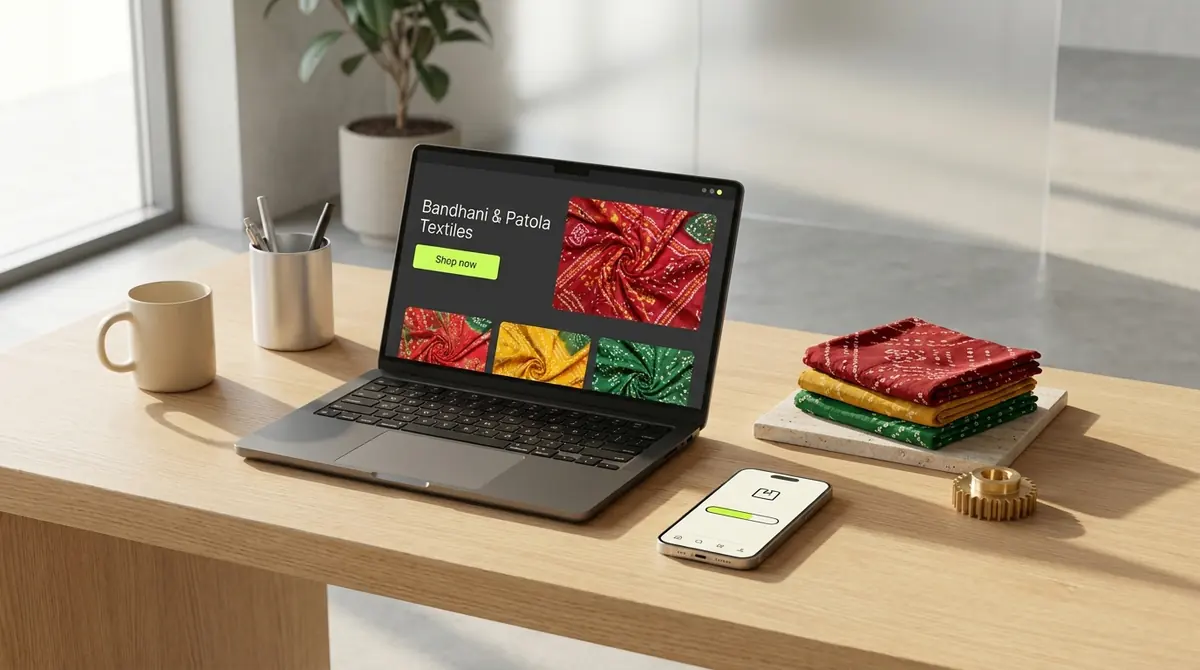
Surat sells sarees, kurtis, dress materials and fabrics to the whole of India and beyond. Many brands serve three kinds of buyer at once: retail customers on Instagram and their own website, resellers who share catalogues on WhatsApp, and wholesalers ordering in bulk. Your e-commerce setup should be chosen around that mix, not around what a friend's brand uses.
When Shopify is the right choice
For most D2C brands starting or growing online, Shopify is the fastest, most reliable option. It handles hosting, security and checkout, and works well with Indian payment and shipping providers.
- You mainly sell to retail customers, in India and abroad.
- Your catalogue is a few hundred to a few thousand products with sizes and colours.
- Your team wants to add products, run sales and manage orders without a developer.
- You want Razorpay or other Indian gateways, UPI, COD and Shiprocket or Delhivery shipping quickly.
When custom (or Shopify plus custom) makes sense
Often the best answer is both: Shopify for retail customers, and a separate B2B portal for dealers and wholesalers, sharing the same product data.
- Wholesalers need their own prices, minimum order quantities and credit terms after logging in.
- You sell by set, by the metre or with complex combinations a theme struggles with.
- Stock lives in Tally or an ERP and must sync automatically with the website.
- Resellers need catalogues with their own margins, or order on behalf of their customers.
Features Surat fashion stores shouldn't skip
- Great product photography and zoom, with every colour variant photographed.
- Clear size charts, blouse and fabric details, and wash-care information.
- COD with verification, to cut fake orders and return-to-origin costs.
- WhatsApp order updates and an easy way to ask questions before buying.
- Fast mobile pages: most fashion buyers shop on their phones.
- International shipping and multi-currency prices if you sell to the diaspora.
The real cost question
Shopify has monthly fees and app costs; custom builds cost more up front and need maintenance. Compare total cost over two to three years, including your team's time, not just the launch price.
Our recommendation
Start with a fast, well-built Shopify store for retail if you're not sure, and add a B2B portal when wholesale orders justify it. We build both, so you won't need to switch partners as you grow.
Related pages
Planning a project? Book a free 30-minute call or tell us what you’re building. Already have a site? Get a free audit.